Showing posts with label Microfoam. Show all posts
Tuesday, March 18, 2014
Sunday, March 16, 2014
How to Roast Coffee with Definitions
Roasting coffee transforms the chemical and physical properties of green coffee beans into roasted coffee products. The roasting process is what produces the characteristic flavor of coffee by causing the green coffee beans to expand and to change in color, taste, smell, and density. Unroasted beans contain similar acids,protein, and caffeine as those that have been roasted, but lack the taste. Heat must be applied for the Maillard and other chemical reactions to occur. As green coffee is more stable than roasted, the roasting process tends to take place close to where it will be consumed. This reduces the time that roasted coffee spends in distribution, giving it a longer shelf life. The vast majority of coffee is roasted commercially on a large scale, but some coffee drinkers roast coffee at homein order to have more control over the freshness and flavor profile of the beans.
Process The coffee roasting process follows coffee processing and precedes coffee brewing. It consists essentially of sorting, roasting, cooling, and packaging but can also include grinding in larger scale roasting houses. In larger operations, bags of green coffee beans are hand or machine-opened, dumped into a hopper, and screened to remove debris. The green beans are then weighed and transferred by belt or pneumatic conveyor to storage hoppers. From the storage hoppers, the green beans are conveyed to the roaster. Initially, the process is endothermic (absorbing heat), but at around 175 °C (347 °F) it becomes exothermic (giving off heat).[1] For the roaster, this means that the beans are heating themselves and an adjustment of the roaster's heat source might be required. At the end of the roasting cycle, the roasted beans are dumped from the roasting chamber and cooled with forced air.
Equipment The most common roasting machines are of two basic types: drum and hot-air, although there are others including packed bed, tangential and centrifugal roasters. Roasters can operate in either batch or continuous modes. Home roasters are available but less common, and tend to be expensive and time consuming. Drum machines consist of horizontal rotating drums that tumble the green coffee beans in a heated environment. The heat source can be supplied by natural gas,liquefied petroleum gas (LPG), electricity, or even wood. The most common employ indirectly heated drums where the heat source is under the drum. Direct-fired roasters are roasters in which a flame contacts the beans inside the drum; very few of these machines are still in operation. Hot-air roasters force heated air through a screen or perforated plate under the coffee beans with sufficient force to lift the beans. Heat is transferred to the beans as they tumble and circulate within this fluidized bed.
Degree of roasting Coffee roasters use names for the various degrees of roast, such as City Roast and French Roast, for the internal bean temperatures found during roasting. Roastmasters often prefer to follow a "recipe" or "roast profile" to highlight certain flavor characteristics. Any number of factors may help a person determine the best profile to use, such as the coffee's origin, variety, processing method, or desired flavor characteristics. A roast profile can be presented as a graph showing time on one axis and temperature on the other, which can be recorded manually or using computer software and data loggers linked to temperature probes inside various parts of the roaster.
Determining degree of roasting The most popular, but probably the least accurate, method of determining the degree of roast is to judge the bean's color by eye (the exception to this is using a colorimeter to measure the ground coffee reflectance under infrared light and comparing it to standards such as the Agtron scale). As the beans absorb heat, the color shifts to yellow and then to increasingly darker shades of brown. During the later stages of roasting, oils appear on the surface of the bean. The roast will continue to darken until it is removed from the heat source. Beans will also darken as they age, making color alone a poor roast determinant. Most roasters use a combination of bean mass temperature, smell, color, and sound to monitor the roasting process.Sound is a good indicator of bean temperature during roasting. There are two temperature thresholds called "cracks" that roasters listen for. At about 200–202 °C (392–396 °F), beans will emit a cracking sound much like popcorn does when it pops, only much quieter. This point is called "first crack," marking the beginning of light roasts. When the beans are at about 224–226 °C (435–439 °F), they emit a "second crack." During first and second "crack" pressure inside the bean has increased to the point where the structure of the bean fractures, rapidly releasing gases, thus an audible sound is emitted.
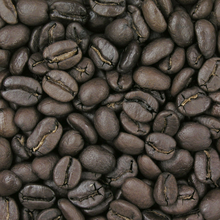
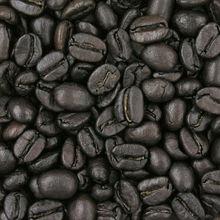
Degree of roast pictorial These images depict samples taken from the same batch of a typical Brazilian green coffee at various bean temperatures with their subjective roast names and descriptions
22 °C (72 °F) Green Beans
Green coffee beans as they arrive at the dock. They can be stored for up to two years.
165 °C (329 °F) Drying Phase
During the drying phase the beans are undergoing an endothermic process until their moisture content is evaporated, signifying first crack.
196 °C (385 °F) Cinnamon Roast
A very light roast level, immediately at first crack. Light brown, toasted grain flavors with sharp acidity, almost tea-like in character.
205 °C (401 °F) New England Roast
Moderate light brown, but still mottled in appearance. A preferred roast for some specialty roasters, highlights origin characteristics as well as complex acidity.
210 °C (410 °F) American Roast
Medium light brown, developed during first crack. Origin character is still completely preserved.
219 °C (426 °F) City Roast
Medium brown, common for most specialty coffee. Good for tasting the varietal character of a bean, although roast character is noticeable
225 °C (437 °F) Full City Roast
Medium dark brown with occasional oil sheen, roast character is fairly prominent. At the beginning of second crack.
230 °C (446 °F) Vienna Roast
Moderate dark brown with light surface oil, more bittersweet, caramel-y flavor, acidity muted. In the middle of second crack. Origin characteristics become nearly eclipsed by roast at this level.
240 °C (464 °F) French Roast
Dark brown, shiny with oil, burnt undertones, acidity diminished. At the end of second crack. Roast character is dominant at this level. Little, if any, of the inherent flavors of the coffee remain.
245 °C (473 °F) Italian Roast
Very dark brown and shiny, burnt tones become more distinct, acidity almost gone, thin body.
250 °C (482 °F) Spanish Roast
Extremely dark brown, nearly black and very shiny, charcoal and tar tones dominate, flat, with thin body.
Caffeine content by roast level Caffeine content varies by roast level. Caffeine diminishes with increased roasting level: light roast, 1.37%; medium roast, 1.31%; and dark roast, 1.31%.[7] However, this does not remain constant in coffee brewed from different grinds and brewing methods. Because the density of coffee changes as it is roasted, different roast levels will contain respectively different caffeine levels when measured by volume or mass, though the bean will still have the same caffeine.
Roast flavors At lighter roasts, the bean will exhibit more of its "origin flavor"; the flavors created in the bean by its variety, the soil, altitude, and weather conditions in the location where it was grown. As the beans darken to a deep brown, the origin flavors of the bean are eclipsed by the flavors created by the roasting process itself. At darker roasts, the "roast flavor" is so dominant that it can be difficult to distinguish the origin of the beans used in the roast.Below, roast levels and their respective flavors are described. These are qualitative descriptions, and thus subjective. As a rule of thumb, the "shinier" the bean is, the more dominant the roasting flavors are.
Common Roast Names
|
Notes
|
Surface
|
Flavor
|
|
Light
|
Cinnamon, American, Half City, New England
|
After several minutes the beans “pop” or
"crack" and visibly expand in size. This stage is called first
crack.
|
Dry
|
Lighter-bodied, higher acidity, no obvious
roast flavor. This level of roast is ideal for tasting the full origin
character of the coffee.
|
Medium
|
City, City+, Full City
|
After being developed through first crack, the
coffee reaches these roast levels.
|
Dry
|
Sugars have been further caramelized, and
acidity has been muted. This results in coffee with higher body, but some
roast flavor imposed.
|
Dark
|
Full City+, Viennese, French, Italian
|
After a few more minutes the beans begin
popping again, and oils rise to the surface. This is called second crack.
|
Shiny. The level of oil correlates to how far
the coffee is taken past second crack.
|
Bittersweet flavors are prominent, aromas and
flavors of roast become clearly evident. Little, if any, origin character
remains.
|
Home roasting Home roasting is the process of roasting small batches of green coffee beans for personal consumption. Even after the turn of the 20th century, it was more common for at-home coffee drinkers to roast their coffee in their residence than it was to buy pre-roasted coffee. Later, home roasting faded in popularity with the rise of the commercial coffee roasting companies. In recent years home roasting of coffee has seen a revival. In some cases there is an economic advantage, but primarily it is a means to achieve finer control over the quality and characteristics of the finished product.
Packaging Extending the shelflife of roasted coffee relies on maintaining an optimum environment to protect it from exposure to heat, oxygen, and light. Roasted coffee has an optimal typical shelf life of 2 weeks, and ground coffee about 15 minutes. Without some sort of preservation method, coffee becomes stale. The first large scale preservation technique was vacuum packing in cans. However, because coffee emitsCO2 after roasting, coffee to be vacuum packed must be allowed to de-gas for several days before it is sealed. To allow more immediate packaging, pressurized canisters or foil-lined bags with pressure-relief valves can be used. Refrigeration and freezing retards the staling process. Roasted whole beans can be considered fresh for up to one month if kept cool. Once coffee is ground it is best used immediately.
Emissions and control Particulate matter (PM), volatile organic compounds (VOC), organic acids, and combustion products are the principal emissions from coffee processing.[11] Several operations are sources of PM emissions, including the cleaning and destoning equipment, roaster, cooler, and instant coffee drying equipment. The roaster is the main source of gaseous pollutants, including alcohols, aldehydes, organic acids, andnitrogen and sulfur compounds. Because roasters are typically natural gas-fired, carbon monoxide (CO) and carbon dioxide (CO2) emissions result from fuel combustion. Decaffeination and instant coffeeextraction and drying operations may also be sources of small amounts of VOC. Emissions from the grinding and packaging operations typically are not vented to the atmosphere. Particulate matter emissions from the roasting and cooling operations are typically ducted to cyclones before being emitted to the atmosphere. Gaseous emissions from roasting operations are typically ducted to a thermal oxidiser or thermal catalytic oxidiser following PM removal by a cyclone. Some facilities use the burners that heat the roaster as thermal oxidisers. However, separate thermal oxidisers are more efficient because the desired operating temperature is typically between 650–816 °C (1,202–1,501 °F), which is 93–260 °C (199–500 °F) more than the maximum temperature of most roasters. Some facilities use thermal catalytic oxidizers, which require lower operating temperatures to achieve control efficiencies that are equivalent to standard thermal oxidisers. Catalysts are also used to improve the control efficiency of systems in which the roaster exhaust is ducted to the burners that heat the roaster. Emissions from spray dryers are typically controlled by a cyclone followed by a wet scrubber.
Labels:
Barista,
Batista,
Cappuccini,
Cappuccino,
Coffee,
Coffee beans,
Espresso,
Foam,
Latte,
Microfoam,
Roaster,
roasting
Saturday, March 15, 2014
Coffee Shop Definitions
Coffee Descriptions:
Aroma:
Aroma is the fragrance of brewed coffee. The smell of coffee grounds before being brewed is referred to as the Bouquet. Think of the aroma of coffee as "the best part of waking up," however, it may not refer only to the brand that that phrase is associated with. Whenever you enjoy a whiff of brewing coffee, you are enjoying its "aroma."
Bitter:
Bitterness is the taste perceived at the back of the tongue. Dark Roasts are intentionally bitter. Over-extraction, or too little coffee at too fine a grind, can be a cause of bad bitterness. Whether or not you like dark roasts, bitterness is a part of coffee cupping. Studying the flavors of coffee includes bitterness, as well as many other qualities.
Bland:
The word "bland" refers to the pale flavor often found in low grown robusta coffees. Blandness can also be caused by under-extraction, meaning that there is too little coffee or too course a grind. Bland coffee has little flavor and is not desirable for people who enjoy the complex flavors and aromas of fine coffee products.
Body:
The tactile impression of the weight of the coffee in the mouth is called its "body." You can see body listed on many different coffee blends or coffee bags. The body of a coffee may range from thin to medium to full to buttery to syrupy. Try many differently bodied coffees to discover which one is your favorite.
Bright:
Tangy acidity is often described as bright, when describing the flavors of coffee. This sharp, or bright quality is common in Central American coffees. You can taste acidity mainly on the tip of your tongue, and bright flavor is refreshing and snappy. Try to discern brightness when tasting new coffees.
Briny:
The salty sensation caused by excessive heat after brewing is described as "briny." Truck-stop coffee will often have this unpleasant quality. To avoid briny coffee, make sure not to let your fresh pot sit on the heat for a long time. If you need another cup hours after you brewed your first pot, it is best to start fresh rather than drinking the now-briny brew.
Earthy:
The description, "earthy," refers to the spicy "of the earth taste" of Indonesian coffees. Earthiness is a very nice quality in coffees, which is smooth, fresh, and even reminiscent of soil or damp earth. While this may seem to be a bad description of flavor, once you recognize it you can appreciate how enjoyable an "earthy" taste really is.
Exotic:
When "cupping" coffee, one word that could be used as a descriptor is "exotic." This generally refers to unusual aromatic and flavor notes, such as berry or floral. Exotic flavors are those which you don't normally experience while drinking your normal cup of coffee, and are often undertones or subtle notes in the overall flavor.
Flavor:
The flavor of coffee is the total impression of Aroma , Acidity , and Body. Flavor does not only describe taste, but it describes all parts of enjoying a cup of coffee. When you practice cupping coffee, the flavor that you describe is the combination of all the sensual elements of coffee drinking.
Spicy:
When cupping coffee, "spicy" describes the flavor of particular spices. When discerning the flavors of coffee, spiciness is similar to what you describe in other foods and drinks. Spice flavors in coffee are just like spices in other foods. Flavors of cinnamon, vanilla, chili, and many other spices can all be discerned in different coffees.
Stale:
Stale coffee has been exposed to oxygen for too long. It becomes flat and has a cardboard taste. Leaving your can or bag of coffee open or cracked to expose air can cause coffee to go stale. To avoid this, use an airtight container to store your coffee, and even keep it in the refrigerator to keep it fresh.
Sweet:
When describing coffee, the term "sweet" means smooth and palatable coffee that is free from defects and harsh flavors. Adding sugar to coffee is not the same as a coffee tasting sweet. Sweetness depends on the actual flavors of the coffee bean and roasting technique, so when learning coffee cupping you will discover that sweetness is a much more subtle flavor than what you normally think of as sugary sweetness.
Tone:
The appearance or color of coffee is described as its tone. A description of the tone of coffee may look like; "this light toned coffee resembles the brown robes of the Franciscan Order." Pouring your coffee into a clear glass mug will help you to determine its tone, and is a technique for coffee cupping.
Winy:
Using the term "winy" when describing coffee means that the coffee has a flavor reminiscent of fine red wine. Kenya is one of the most notable regions to produce" winy" coffee. This rich, complex flavor is something that you can learn to recognize when studying cupping. The more coffees you taste, the more wine, sweet, and other flavors you will be able to discern. Aroma Aroma is the fragrance of brewed coffee. The smell of coffee grounds before being brewed is referred to as the Bouquet. Think of the aroma of coffee as "the best part of waking up," however, it may not refer only to the brand that that phrase is associated with. Whenever you enjoy a whiff of brewing coffee, you are enjoying its "aroma."
Your Favorite Coffee Drinks:
Cappuccino:
Cappuccino is a popular coffee house drink that you can also make at home as long as you have an espresso machine and the proper beans. A cappuccino consists of espresso topped with equal parts foamed and steamed milk. This drink is often served in a large, rounded coffee mug and is best enjoyed at a leisurely pace.
Café Americano:
Café Americano is a American drip coffee with an Italian twist. Made from equal portions of espresso and boiling water, rather than hot water filtering through ground coffee beans, a café Americano has the flavor of a stronger version of brewed coffee. It is a drink of choice for those who love strong, robust coffee flavors.
Café au lait:
The café au lait is made with equal parts of brewed coffee and steamed milk. This is a traditionally French drink which is also very popular in New Orleans and often served with beignets - a fried, doughy breakfast treat. One tip for saving pennies on your coffee shop habit is to replace the often pricier cappuccinos or lattes with a cafe au lait every now and then.
Café breve:
A café breve is a milk-based espresso where half-and-half is used instead of milk. Richer and creamier than milk, half and half makes the café breve a more decadent choice. Half and half also increases the amount of foam in this drink, making it fluffier than a typical latte. Since the proper way to make a cafe breve is with half and half, this is not the best drink of choice for those on a diet or watching calories.
Café con leche:
A café con leche is made with 1.5 ounces of espresso with steamed milk to fill an eight-ounce cup. This tasty beverage is a Spanish version of café au lait or Italian caffe e latte. It is customary to add sugar or a pinch of salt to café con leche, according to your own taste. Since this drink originated in Spain, it is also common in Latin America and around the world.
Café con panna:
Café con panna is made up of espresso topped with whipped cream. This drink has Italian routes but sometimes goes by other names. Café con panna may be referred to as café Vienne in the United States, and café Viennois in the UK. This is a delicious drink that is actually more old fashioned than the popular latte and cappuccino.
Caffe corretto:
Caffe corretto is a alcoholic coffee drink. It is prepared by mixing espresso with a shot of brandy, cognac, or liqueur. This drink has its origins in Italy, and oftentimes grappa or sambuca are used as the liqueur. A caffe corretto could be a great way to end a dinner party where Italian foods were served. It is also a wonderful accompaniment with chocolate desserts, ice cream or gelato.
Café crème:
A café crème consists of 1.5 ounces of espresso combined with one ounce of heavy cream. This is a traditional French coffee drink which is truly delicious and decadent. It is most often served in a large cup with hot cream. If you find yourself in a French cafe with an enjoyable book, a cafe crème could just be the perfect drink to order.
Café doppio:
A café doppio is a double shot of espresso with one shot of hot water. This is a strong coffee drink that can really give you a "pick me up" on those rough mornings. If you enjoy strong coffee, you may want to try a café doppio. Knowing the proper Italian term for this drink will also help you out if you are traveling through Italy and sampling the many cafes there.
Café frappuccino:
The café frappuccino is a coffee slush, blending iced coffee, milk, flavorings and ice. Starbucks has made the frappuccino a very popular drink that you can see someone carrying in virtually any shopping mall in America. Creating a café frappuccino at home is something to try. Blend together iced coffee, milk, sugar and any flavorings you like to create your own frosty treat.
Café freddo:
A café freddo consists of chilled espresso served in a glass, often iced. This is a delicious choice on a hot summer day. If you like a strong coffee flavor, you will likely enjoy a café freddo. It also tastes great with sugar added, if you enjoy sweeter coffee drinks. If you have an espresso machine at home, you can enjoy a cafe freddo with only as much, if not less effort than a regular cup of drip coffee.
Café latte
The café latte is a very popular coffee drink, whether it is being ordered in a coffee shop or made at home by a coffee connoisseur. It is prepared with 1.5 ounces of espresso in a six-ounce cup filled to the top with steamed milk, forming a dense drink. The cafe latte may also be topped with foamed milk, if desired.
Café latte macchiato:
A café latte macchiato is a glass of hot milk with a teaspoon of espresso. This is a very light coffee drink, which is very smooth and enjoyable. This is a great choice for when you want a nice hot coffee drink, but don't want much caffeine. It can be sweetened to taste or flavors such as almond, vanilla or caramel may be added if desired.
Café latteccino:
A café latteccino is composed of espresso with two parts of steamed milk and one part foamed milk. This could be considered a hybrid of a cappuccino and a latte. With a espresso machine at home, you can practice creating lesser known drinks like the cafe latteccino. Impress guests or just yourself with this smooth and tasty drink.
Caffé lungo:
The café lungo is a long espresso made by adding boiling water to a 1.5 ounces espresso. It is the Italian term for an Americano. Lungo translates as "long," which is pertinent because the addition of hot water to this espresso drink stretches the drink, or allows you to drink it for a longer amount of time.
Caffé macchiato:
To make a caffé macchiato, pour 1.5 ounces of espresso into a demitasse and top it with a dollop of foamed milk. Macchiato means "marked" in Italian - so this drink is espresso which is marked with milk. Traditionally, only a teaspoon of milk is added to a macchiato, but there are many variations on the drink that you can find around the world.
Café mocha:
The café mocha contains espresso, chocolate syrup, and steamed milk, often topped with whipped cream and cocoa powder or chocolate shavings. The mocha is a variation of a latte, but with chocolate added. There are many variations of this popular drink, including white chocolate mochas and tuxedo mochas, which contain both white and dark chocolate.
Café ristretto:
The café ristretto is highly concentrated espresso (3/4 to one ounce of water used for extraction), resulting in a denser, and more aromatic espresso. Another term for this drink is "short," "café court" or "café serre" in French. This drink results in a thicker and much more robust espresso which would be enjoyed by a strong coffee lover.
Café Romano:
The café Romano consists of regular espresso, served with a twist of lemon or lemon peel. It is a slight twist on a simple espresso which adds a bit of fresh and zest flavor. This is a simple drink that is often enjoyed in the cafes of Italy and throughout the Mediterranean. To give yourself the feeling of an exotic vacation at home, simply add a twist of lemon to your espresso on any morning.
Americano:
An Americano is a shot or two of espresso that has been poured into a glass filled with hot water. This is an easy drink to make at home and is a nice alternative to regular drip coffee. If you enjoy strong coffee, an Americano may be a drink that you will like. Add sugar if you enjoy a sweeter coffee drink.
Caffe Americano:
A caffe Americano is made up of espresso that is cut with very hot water to fill an American size cup. If you prefer the flavor of espresso, and have an espresso machine at home, making a caffe Americano is a good choice for you. You will have a larger amount of coffee, bit the same qualities of an espresso.
Caffe Mocha:
A caffe mocha can be prepared in a variety of ways. Basically, it is a chocolate flavored cafe latte. Mochas are often prepared with whipped cream on top, and are a very popular coffee shop favorite. Some mochas are made even more decadent with rich dark chocolate shavings sprinkled atop the whipped cream.
Cafe Noir:
The phrase "café noir" describes coffee served without cream or milk. It is the French translation of "black coffee." If you are feeling sophisticated, try ordering a café noir with your breakfast and hopefully your waiter or waitress will understand your French. Don't hold it against them if they don't know you are merely ordering your coffee black.
Cappuccino:
Cappuccino gets its name from the Italian order of Catholic Capuchin monks, whose hooded robes resemble the drink's cap of foam in shape and color. The frothed milk from the top of the steaming pitcher is spooned on top to "cap" the cappuccino and retain heat. The proportion of espresso to steamed and frothed milk for cappuccino is usually 1/3 espresso, 1/3 steamed milk and 1/3 frothed milk on top.
Doppio:
A doppio is a double shot of espresso. If you are really in need of a quick pick me up, this double serving of espresso could be the perfect solution. A doppio is served in a demitasse, or a half size cup. Depending on your personal preferences, drink a doppio plain or with some sugar added. Also see solo.
Espresso:
The word espresso refers to a brewing method that extracts the heart of the coffee bean. It was invented in Italy at the turn of the century. A pump-driven machine forces hot water through fine grounds at around nine atmospheres of pressure. It should take between 18 to 23 seconds to extract a good shot. This will produce from 3/4 to one ounce of great liquid. This brewing process produces a sweet, thick and rich, smooth shot of espresso. Espresso comes from the Latin word "Expresere" which means "to press out."
Espresso Breve:
An espresso breve is an espresso with half and half added. Adding half and half to espresso makes the drink more creamy and smooth. If you enjoy milk or cream in your coffee, or enjoy the taste of espresso, this could be a drink that you enjoy. With an espresso machine at home, this is an easy and delicious drink to prepare.
Espresso Lungo:
Espresso lungo is a shot that is pulled long for a bit of extra espresso. While many believe this maximizes the caffeine, in most shops this merely produces a bitter cup. Because the beans are exposed to heat for a longer period of time, the taste of the espresso may be more bitter than a traditional espresso shot.
Espresso Macchiato:
An espresso macchiato is an espresso with a minimal amount (or "mark") of steamed milk on top. This is a drink with a strong espresso flavor and just a touch of milkiness. An espresso macchiato will often have foam in it, but the traditional preparation of the drink does not require foam, but rather milk or steamed milk.
Espresso Ristretto:
Espresso ristretto translates literally to "restricted" espresso. This drink is a shorter draw of espresso than the traditional draw. The goal of making a shorter draw is a thicker and more flavorful espresso. If you truly love the full flavor of espresso, a ristretto is a drink that you should try.
Latte:
A latte is made up of a shot or two of espresso that has been poured into a cup filled with steamed milk and topped off with about a quarter of an inch of foamed milk. This smooth and tasty drink is very popular for its high caffeine and smooth flavor. It can also be made with whole milk, low fat or even skim milk for those who are watching calories.
Ristretto:
A ristretto is the strongest and most concentrated espresso drink. It is made with about half the amount of water but the same amount of coffee as a regular espresso. It is pure, intense, and wonderful in taste. Ristretto in Italian means "restricted," or that the amount of water used to brew the espresso is restricted.
Solo:
A solo is a single shot of espresso. One shot of espresso measures one fluid ounce. When you pour a solo into a clear demitasse, you will be able to see the three main portions of an espresso shot; the crema, the body and the heart. Crema is the foamy top layer, the body is in the middle, and the heart is the very bottom and is the bitter counterpart to the crema's sweetness. Also see doppio.
All about Coffee Pods:
Tassimo T-Disc:
TASSIMO T Discs are small, pre-measured discs that work together with the TASSIMO machine to create a perfect hot drink every time. TASSIMO T-Discs come in many different varieties, from popular Starbucks coffee blends and flavors, to Seattle's Best Coffee, Gevalia Cafe and more. TASSIMO T Discs contain only the finest, 100% Arabica coffee. T Discs can also make tea, hot chocolate, cappuccinos and more.
Coffee Pod:
Coffee pods are a generic term for small, single servings of coffee which work in many different single-serving coffee machines. Coffee pods work with such machines as the Keurig, TASSIMO, and Senseo. Pre-measured coffee pods make brewing the perfect cup of coffee a simple and quick task. They come in a vast variety of flavors, blends, and even specialty drinks such as lattes and cappuccinos.
K-Cup:
K-Cup is the name for the coffee pod that works specifically with Keurig single cup brewing systems. Keurig K-Cups come in a large selection of brands, flavors, and drinks. Whether you are craving fine Twinning's tea, Newman's Own coffee or a nice cup of hot cocoa, you can find a K-Cup that fits the bill.
Single Cup:
Oftentimes, machines such as the Keurig series, Senseo, and TASSIMO are referred to as "single cup" coffee machines. They brew coffee one cup at a time, but some of them brew coffee in more than one size. For example, they may brew in single coffee mug sizes, as well as larger travel mug sizes. Single cup coffee machines save water and produce great tasting coffee each and every time.
Senseo Pod:
Senseo coffee pods work with Senseo single cup coffee machines. Senseo pods come in several different flavors and varieties. From cappuccino, to decaffeinated, flavored blends, and even espresso. The coffee in Senseo pods is selected and roasted by the world's second largest coffee roaster - Douwe Egberts.
Melitta Pod:
Melitta coffee pods fit in virtually all coffee pod brewers and are made of the finest Arabica coffee blends. Melitta coffee pods are individually wrapped in foil in order to maintain the highest level of freshness. Made with 100% Arabica coffee, Melitta coffee pods are truly delicious and enjoyable.
Flavia Fresh Pack:
Flavia Fresh Packs are single serve coffee pods for Flavia brewing systems. Fresh packs come in several different varieties, including coffees, teas, hot chocolates and more. Flavia fresh packs fit home and office brewing machines and come in specialty flavors like MilkyWay and Dove hot chocolate.
Coffee Preparation:
Batch Roaster:
A batch roaster is a machine which roasts a given quantity at one time. It does not continually roast beans. There is an identifiable start and end time to the roaster's capabilities. A batch roaster enhances the flavor of coffee because smaller batches are roasted at a time, so more of each individual bean's flavor is released.
Demitasse:
A demitasse is a small (1/2 size) cup used for serving espresso. It is a French term meaning "half cup." Since espresso is served in much smaller portions than drip coffee, a demitasse is the perfect size for presenting espresso. A set of demitasses would be a wonderful gift for a coffee lover or someone who owns their own espresso machine.
French Press:
A French press is a device for making coffee in which ground coffee is steeped in water. The grounds are then removed from the coffee by means of a filter plunger which presses the grounds to the bottom of the pot. The French press can also be referred to as a plunger pot and is a great way to brew your own coffee when on the go.
Coffee Roasting:
Coffee roasting is the process by which green, unprocessed coffee beans are turned into roasted coffee products. The roasting process usually occurs close to when the coffee will be consumed. Dark roasting produces a stronger, more intense flavor than light roasting, which leaves the coffee to have more of its inherent plant flavors.
Be a Coffee Pro with these Coffee Terms:
Acidity:
Acidity describes the sharp lively quality characteristic of high-altitude grown coffee. Acidity is tasted mainly at the tip of the tongue. It is the brisk, snappy quality that makes coffee refreshing. It is NOT the same as bitter or sour and has nothing to do with pH factors. Coffees are low in acidity, between 5 and 6 on the pH scale.
Bag:
While bag is a commonplace word, when it is used in reference to coffee it specifically means a burlap sack filed with coffee. In various countries a "bag" is a different weight. For example, in Brazil a bag is 132 pounds. In Colombia it is 154 pounds. In Hawaii it is 100 pounds. While bags vary in weight, 132 pounds is the most common.
Barista:
A barista is a person who makes coffee drinks as a profession. Starbucks has made recognition of the word "barista" much more profuse, because of the popularity and recognition of their brand. Barista is an Italian word, which not only refers to Starbucks employees, but ANY person who makes coffee as their profession.
Blend:
"Blend" refers to a mixture of two or more individual varietals of coffee. A blend can add some depth and complexity to your morning brew. Often, coffee blends are comprised of different types of coffee from one region. Blends can also make certain expensive types of coffee more affordable, by blending them with less expensive varietals.
Cupping:
You may be familiar with wine "tasting," in which wine drinkers and connoisseurs observe the qualities of wine. When you are discerning the different flavors, body, acidity and other qualities of coffee, it is called "cupping." This is a skill that takes time to learn and develop, but anyone who enjoys coffee can learn cupping with practice.
Caffeine:
Caffeine is the drug contained in coffee which helps to wake you up and keep you alert. Caffeine is a bitter white alkaloid derived from coffee (or tea) and used in medicine for a mild stimulant or to treat certain kinds of headache. It is what gives you a jolt of energy in the morning, but decaffeinated coffees are also widely available for those who dislike the effects of caffeine or want a cup of coffee in the evening before bed.
Crema:
The caramel colored foam that appears on top of a shot of espresso during the brewing period is called its crema. It soon dissipates after brewing. If your Crema is gone then you waited too long. . . or you received a bad shot! The crema makes a 'cap' which helps retain the aromatics and flavors of the espresso within the cup - the presence of crema indicates an acceptable brew. Crema occurs due to colloids and lipids forced out into an emulsion under the pressure of a espresso machine.
French Roast:
French roast refers to dark roasted coffee beans. A French roast has a bittersweet taste, but not like burnt charcoal. A French roast generally has a smoky-sweet flavor that is light bodied but quite intense. A French roast can also be described as a double roast, and usually the inherent flavors of the coffee bean are unrecognizable.
Froth or Foam:
The terms froth and foam refer to milk which has been made thick and foamy by aerating it with hot steam. When you hear that loud, hissing sound in coffee shops and restaurants, it is the sound of baristas making froth or foam by infusing milk with very hot, pressurized air. Froth, or foam, is a light and tasty element of lattes, mochas, and many other popular coffee drinks.
Hard Bean:
Hard bean coffee is grown at relatively high altitudes, from 4,000 to 4,500 feet above sea level. Coffee grown above 4,500 feet is referred to as strictly hard bean. This terminology says that beans grown at higher altitudes mature more slowly and are harder and denser than other beans and are thus more desirable.
History of Coffee:
Coffee's history goes back to at least the fifteenth century and spans the globe. It is believed that Ethiopia is the place where the consumption of coffee originated, and then spread to Yemen and Egypt. Coffee beans are believed to have been first roasted and brewed in Arabia, then spread to the Middle East, Northern Africa, and finally Europe. Coffee is a major world commodity and its history is long and rich.
Mocha:
A "mocha" is a small, irregular coffee bean which has a unique, acidic character. The mocha bean is generally shipped from Mocha Yemen, and was introduced to Europe and thus the rest of the world by Marco Polo. The Mocha coffee bean is sometimes mixed with coffee shipped from Mocha Yemen. The Mocha coffee bean has no correlation with the chocolaty drink - so the two should not be confused.
Monsooned Coffee:
Monsooned coffee has been deliberately exposed to monsoon winds in open warehouse to increase body and reduce acidity. One common example of monsooned coffee is Javanese coffee. By exposing coffee to warm, moist air during the rainy season, the flavor is strengthened while acidity is lost. This type of coffee can be quite expensive, and is very delicious.
Peaberry:
Normally, each coffee cherry contains two beans. Occasionally, a cherry will form with only one bean. These single coffee beans are called peaberries and are frequently separated and sold as their own distinct and special varietal. New Guinea is one of the more popular regions where peaberry coffee originates.
Soft Bean:
The term soft bean describes coffee grown at relatively low altitudes (under 4,000 ft). Beans grown at lower altitudes mature more quickly and produce a lighter, more porous bean. Some examples of soft bean coffee (or Typica beans) include Jamaican Blue Mountain, Kona, and some Colombian and Indonesian varietals.
Varietal:
The term used for the coffee that comes from a geographical region is "varietal." Sumatra, Kenya, Costa Rica or a Java are all coffee varietals. As in wine, the soil, climate and cultivation methods affect the taste of your coffee. The term varietal is actually a misnomer, since Arabica coffee plants are basically of the same species, unlike wine grapes which come from different species of grape vines.
Labels:
Barista,
Batista,
Cafe,
Cappuccini,
Cappuccino,
Coffee,
Coffee time line,
Espresso,
Foam,
Irish coffee,
Latte,
Microfoam
Thursday, March 13, 2014
The Art of Latte
Latte art is particularly difficult to create consistently, due to the demanding conditions required of both the espresso shot and milk. This, in turn, is limited by the experience of the barista and quality of the espresso machine. The pour itself, then, becomes the last challenge for the latte artist.
Latte art developed independently in different countries, following the introduction of espresso and the development of microfoam, the combination of crema and microfoam allowing the pattern; it presumably was initially developed in Italy.
In the United States, latte art was developed in Seattle in the 1980s and 1990s, and particularly popularized by David Schomer.Schomer credits the development of microfoam ("velvet foam" or "milk texturing") to Jack Kelly of Uptown espresso in 1986, and by 1989 the heart pattern was established and a signature at Schomer's Espresso Vivace.
The rosette pattern was then developed by Schomer in 1992, recreating the technique based on a photograph he saw from Cafe Mateki in Italy. Schomer subsequently popularized latte art in his course "Caffe Latte Art". At the same time Luigi Lupi from Italy met Schomer on the internet and they exchanged videos they made on Latteart and Cappuccini Decorati.
Latte art is a mixture of two colloids: the crema, which is an emulsion of coffee oil and brewed coffee; and the microfoam, which is a foam of air in milk. Milk itself is an emulsion of butterfat in water, while coffee is a mixture of coffee solids in water.
Neither of these colloids are stable – crema dissipates from espresso, while microfoam separates into drier foam and liquid milk – both degrading significantly in a matter of minutes, and thus latte art lasts only briefly.
Latte art requires first producing espresso with crema and microfoam, and then combining these to make latte art. See microfoam: procedure for how microfoam is made; this article concentrates on the latte art once the foam is made.
Before the milk is added, the espresso shot must have a creamy brown surface, an emulsion known as crema. As the white foam from the milk rises to meet the red/brown surface of the shot, a contrast is created and the design emerges.
As the milk is poured, the foam separates from the liquid and rises to the top. If the milk and espresso shot are "just right," and the pitcher is moved during the pour, the foam will rise to create a pattern on the surface. Alternatively, a pattern may be etched with a stick after the milk has been poured, rather than during the pour.
Some controversy exists within the coffee community as to whether or not there is excessive focus on latte art amongst baristas. The argument is that too much focus on thesuperficial appearance of a drink leads some to ignore more important issues, such as taste.This is especially relevant with new baristas.
There are two main types of latte art: free pouring (pattern created during the pour) and etching (using a tool to create a pattern after the pour). Free pouring is far more common in American cafes, and requires little additional time in preparing a drink.
The two most common forms of poured latte art are a heart shape and the "rosetta" or "rosette", also known as "fern" which resembles a type of flower or fern. Of these, hearts are simpler and more common in macchiatos, while rosettes are more complex and more common in lattes.
For free pouring, the cup is either kept level or tilted in one direction. As the milk is poured straight into the cup, the foam begins to surface on one side (due to the tilt).
The barista then moves the pitcher from side to side as they level the cup, or simply wiggle the spout back and forth, and finishes by making a quick strike through the previously poured pattern.
This "strike" creates the stem portion of the flower design, and bends the poured zig-zag into a flower shape.
A more direct pour and less wiggling yields a heart shape, and minor variation (reduced lobes, larger stem) yields an apple shape.
More complex patterns are possible, some requiring multiple pours. Some examples of advanced latte art techniques are that of the tulip, wave heart, swan, or even a scorpion.
Etched patterns range from simple geometric shapes to complicated drawings, such as crosshatched patterns, animals, and flowers, and are generally performed with a coffee stirrer of some sort.
Etched latte art typically has a shorter lifespan than free poured latte art as the foam dissolves into the latte more quickly.
Latte art is made by adding microfoam to espresso. Similar patterns, though much fainter, can be achieved by adding microfoam to brewed coffee, as in a café au lait or tea.
Alternatively, patterns can be etched in the crema of an espresso, without adding any milk, in order to yield espresso art.
Subscribe to:
Posts (Atom)


.jpg)